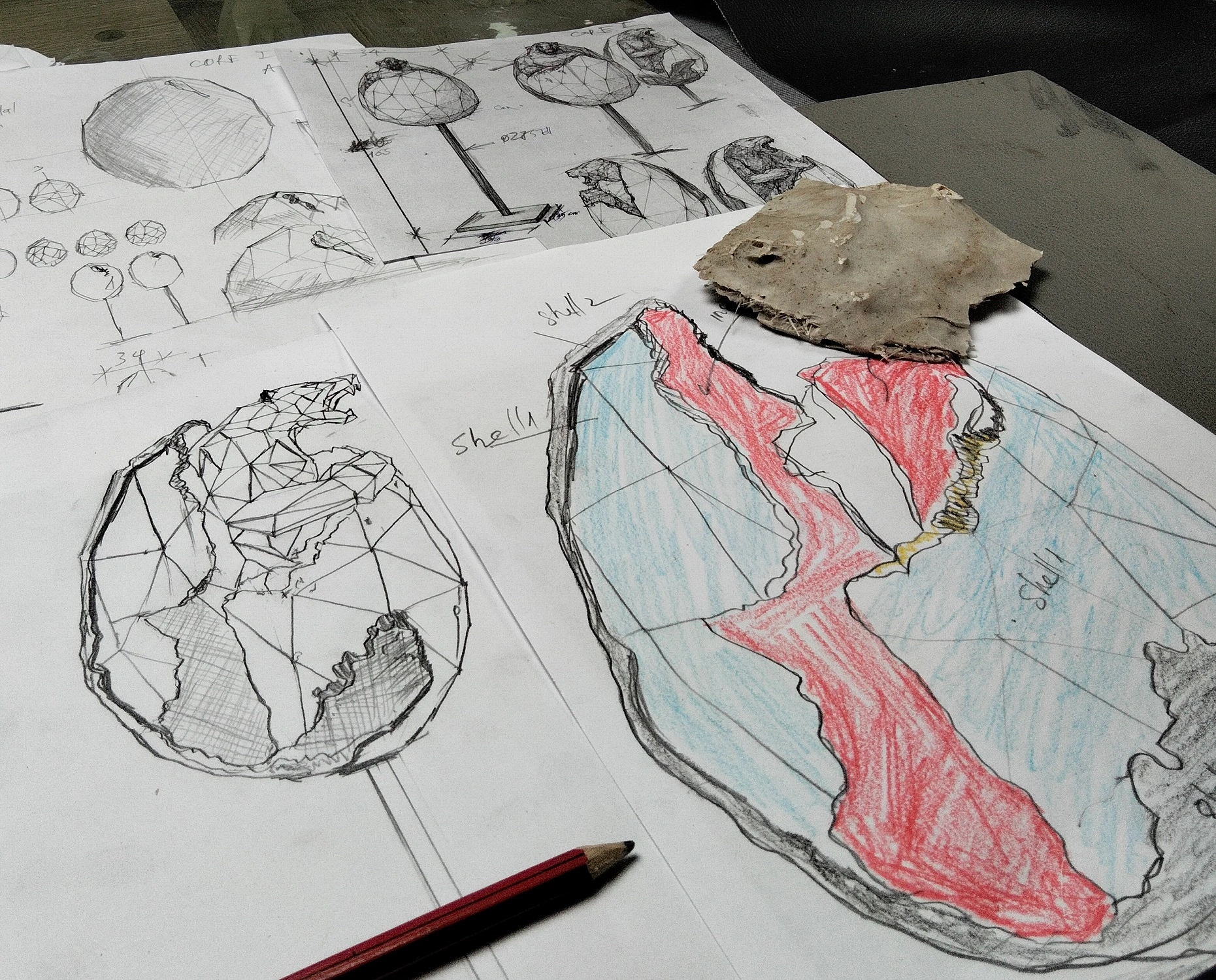
What should The Young King look like at the very moment he first becomes present?
Genesis Core I — Origin Egg established the place of origin.
Genesis Core II — Fracture of Origin broke that enclosure.
The third work required something entirely different — a body.
The development of Primal Form therefore centered on finding an appearance that felt neither heroic nor fully formed. The Young King had to emerge at an extremely early stage of existence: childlike, vulnerable and still largely untouched by the identity he would later discover.
During the development of the sculpture, the form was refined toward the presence of a very young child. Decorative elements were restrained so that the figure itself — rather than symbols of power or status — remained at the center of the work.
This restraint became essential.
Primal Form was not intended to show a king who already understood who he was.
It was created to show the first body from which that identity could eventually grow.
As the figure took shape, the three-part Genesis Core became physically complete:
Origin became fracture.
Fracture became emergence.
Emergence became a living form.
The making of Genesis Core III therefore marks more than the completion of a sculpture.
It marks the moment The Young King first acquired a body.