The visual language established in Spring I remained: a childlike flower drawn directly onto the body of The Young King with wax crayon.
But the flower itself needed to move forward.
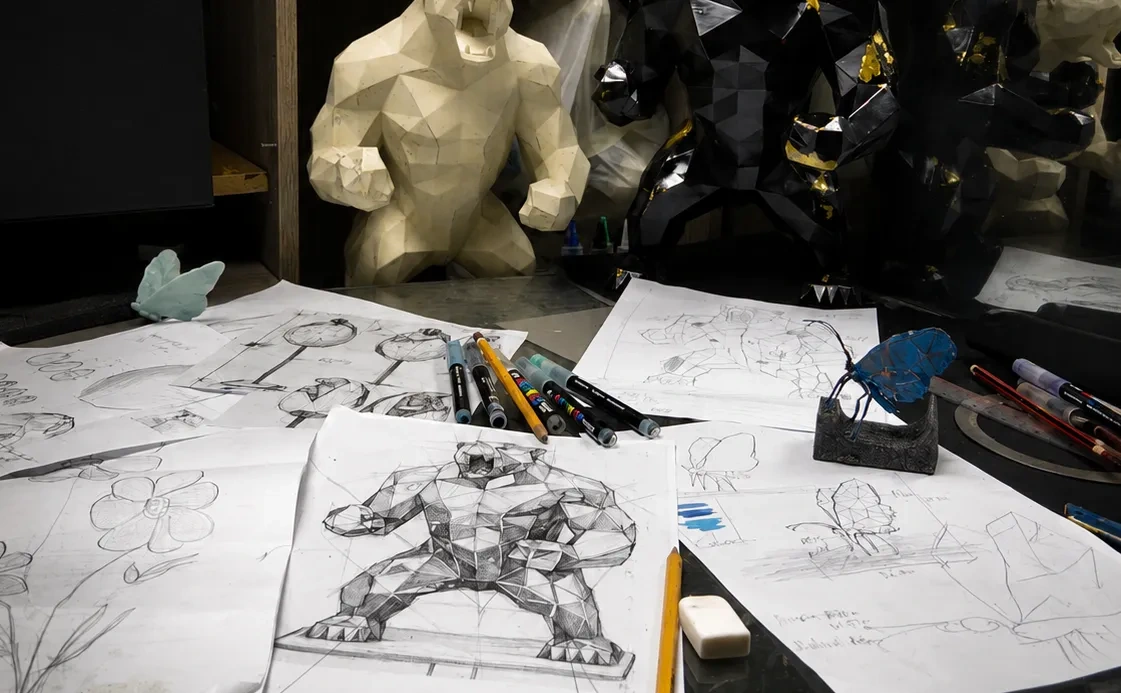
In Spring I, it rose from a simple grass-like stem. For Spring II, that structure developed into a woody branch, giving the flower a stronger sense of growth while preserving the innocence of the original drawing language.
The making of Spring II therefore centered on balance.
The new form had to become more developed without becoming too refined.
The branch could grow, but the drawing still had to feel immediate — something closer to the mark of a child than to a finished botanical illustration.
Wax crayon remained central to this process. Its direct, imperfect line allowed the drawing to retain softness and spontaneity. The surface was left uncoated, preserving the material character of the crayon as part of the sculpture itself.
Through this change, Spring II began to establish an important principle within The First Flower:
Each work remembers what came before, but does not repeat it.
Spring I introduced the flower.
Spring II allowed it to grow.
And with that growth, the seasonal language of The First Flower began to take shape.