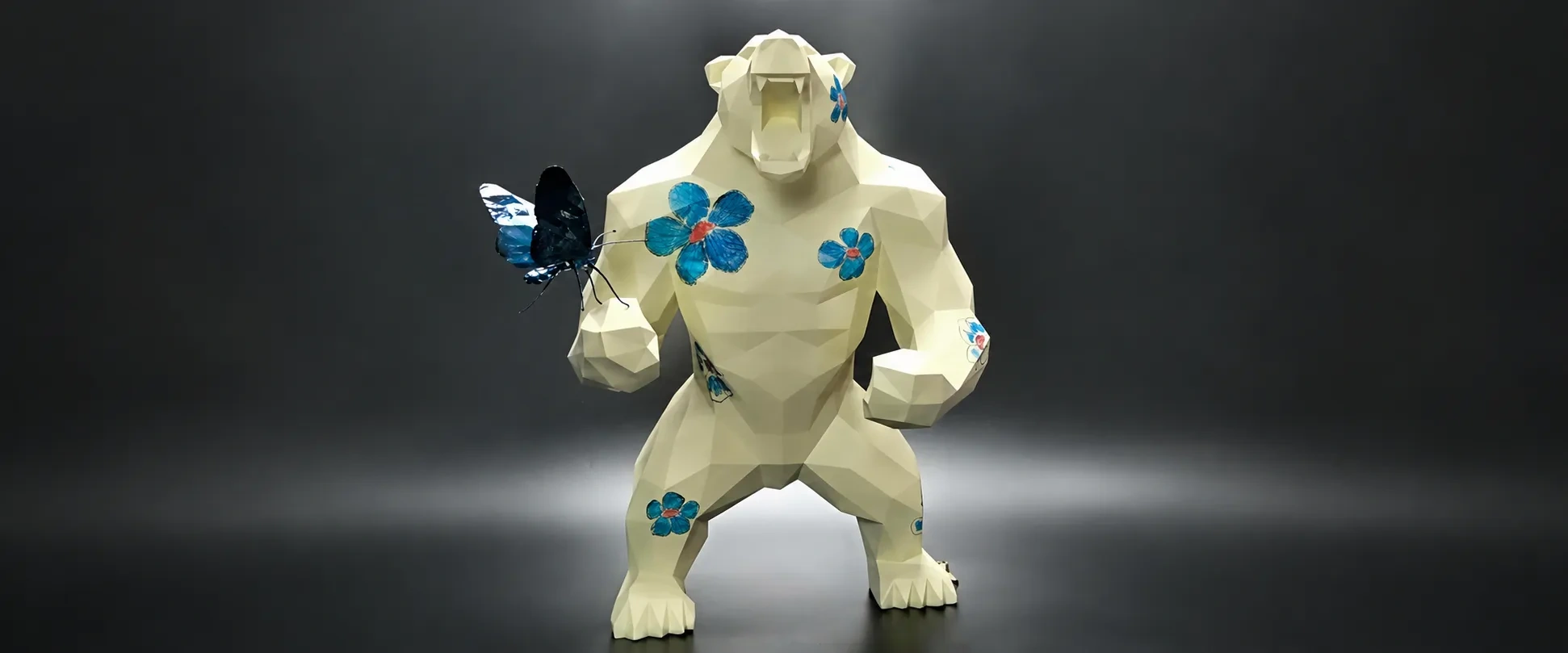
Following Spring I and Spring II, the work continues the childlike wax-crayon language established on the body of The Young King while introducing a decisive change in the form of the flower.
In Spring I, the flower rises from a simple grass-like stem.
In Spring II, it grows from a woody branch.
In Spring III, the flower separates from both stem and calyx.
It appears as an independent form.
This change brings the Spring sequence to a new point. The flower is no longer defined by the structure supporting it. Its shape, color and presence can now exist on their own while remaining part of the same developing visual language.
The drawing remains intentionally direct and childlike. Wax crayon preserves the softness, irregularity and immediacy of the mark, and the surface remains uncoated.
Within the twelve-work sequence of The First Flower, Spring III therefore completes the first three moments of transformation.
Spring I — appearance.
Spring II — growth.
Spring III — separation.
The season has not yet changed.
But the flower already has.